French luxury house
Overview
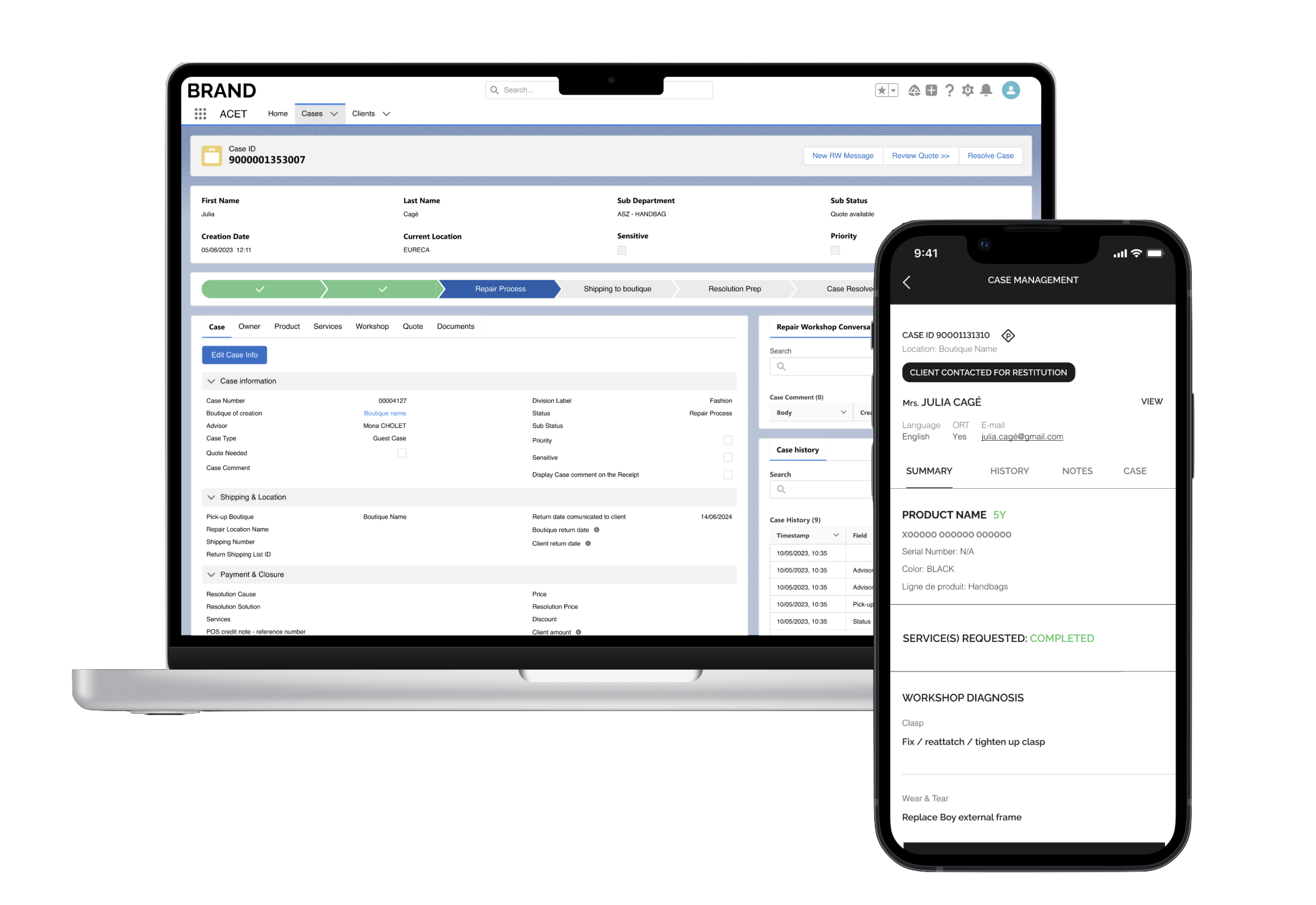
As the brand decommissioned its outdated after-sales management tool, we led the full redesign of a Salesforce-based global after-sales platform; from the framing phase to rollout. The solution included:
A custom boutique-facing app to manage after-sales cases efficiently
A Salesforce back-office for streamlined operations across markets and divisions
-
Creating user flows
Creating high fidelity mock-ups & prototypes
Analyzing data
-
Figma
Salesfoce
Trello
Jira
Excel & Power
-
Mobile app PO
Salesforce PO
Business Analysts
Mobile app developers
Salesforce developers
Challenges
Fragmented Workflows & Inconsistent Experience
Each market and boutique handled after-sales cases differently, leading to inefficiencies and an inconsistent client experience world wide.
Divergent Processes Across Divisions
The Fashion and Watches & Fine Jewelry divisions had distinct workflows, making it difficult to standardize processes while addressing their unique needs.
Inefficient Case Creation
Advisors spent excessive time creating cases due to complex workflows, impacting client interactions.
Rework
Incorrect product & service identification resulted in errors, requiring additional processing time from repair workshops.
Limited Advisor Expertise
Advisors, often specialized in specific product categories, struggled to handle after-sales cases across unfamiliar categories, leading to generic service selections which require repair quotes, and therefore additional back-and-forth with clients.
Disputes & Lack of Transparency
Client disputes over product condition, with accusations of workshop-induced damage. Advisors also had limited visibility into case progress, forcing them to rely on time-consuming manual updates.
Slow Repair Turnaround
Frequent repair quotes slowed down turnaround times due to complex communication loops between boutiques, clients, and workshops.
Untracked Discounts & Revenue Loss
The case closure process lacked structure, leading to unmonitored discounts.
Project Goals & Solutions
Streamline and Standardize Workflows🎯 Goal
Create a unified after-sales process across all markets while accommodating the specific needs of different divisions
💡 Solution
Mapped existing workflows, collaborated with BAs, and designed a process that worked around technical constraints.
Optimize Case Creation🎯 Goal
Reduce case creation time to under 6 minutes, allowing advisors to focus on high-value client interactions
💡 Solution
Designed a guided, step-by-step process that removed guesswork and reduced errors.
Faster turnaround & reducing rework🎯 Goal
Reduce reliance on unnecessary repair quotes & rework in repair workshops by improving service selection and accelerating repair times.
💡 Solution
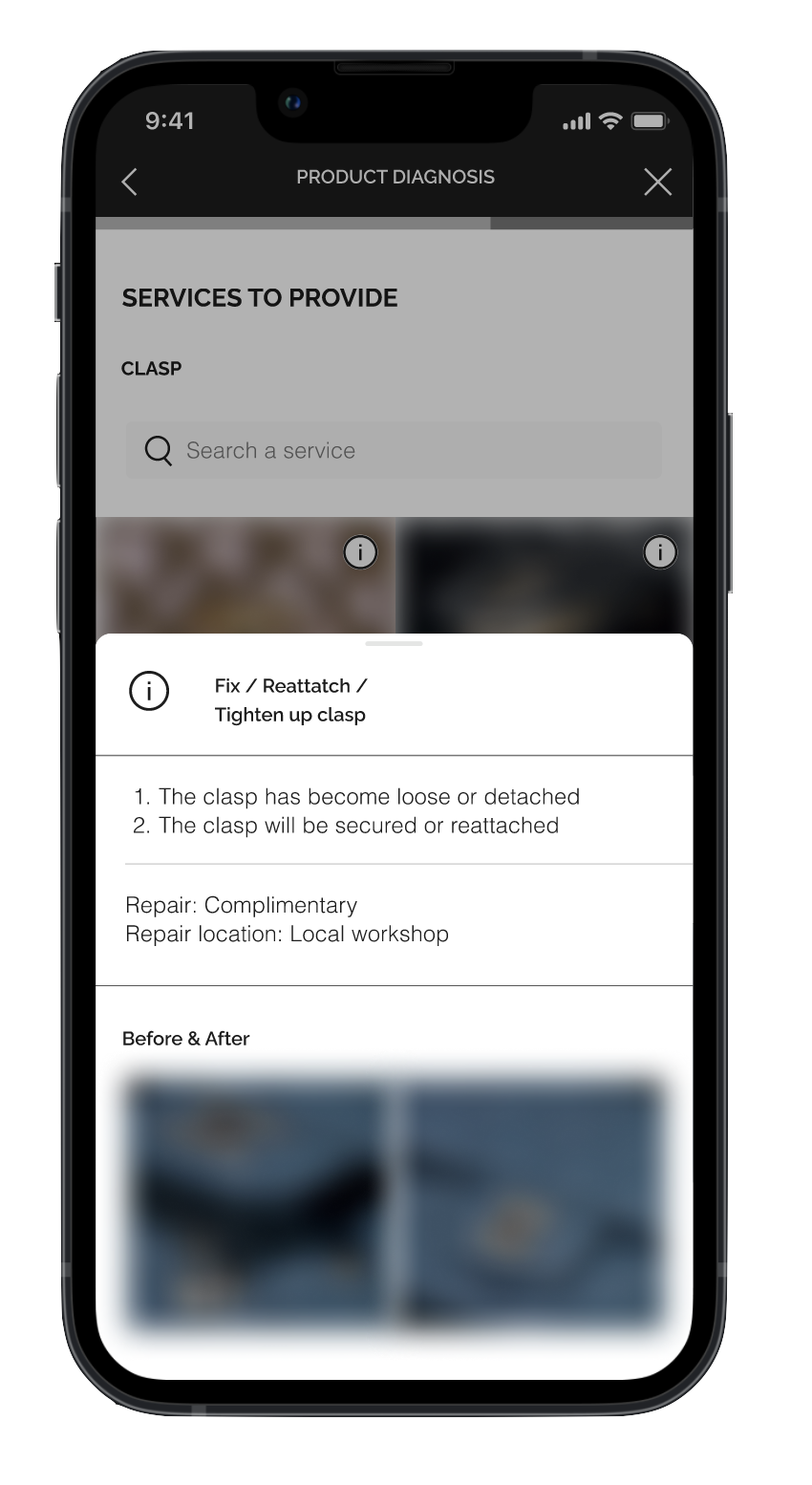
Enhance service selection with visual aids and descriptions to reduce reliance on generic services, thereby minimizing unnecessary quotes and accelerating repairs.
Integrated product qualification🎯 Goal
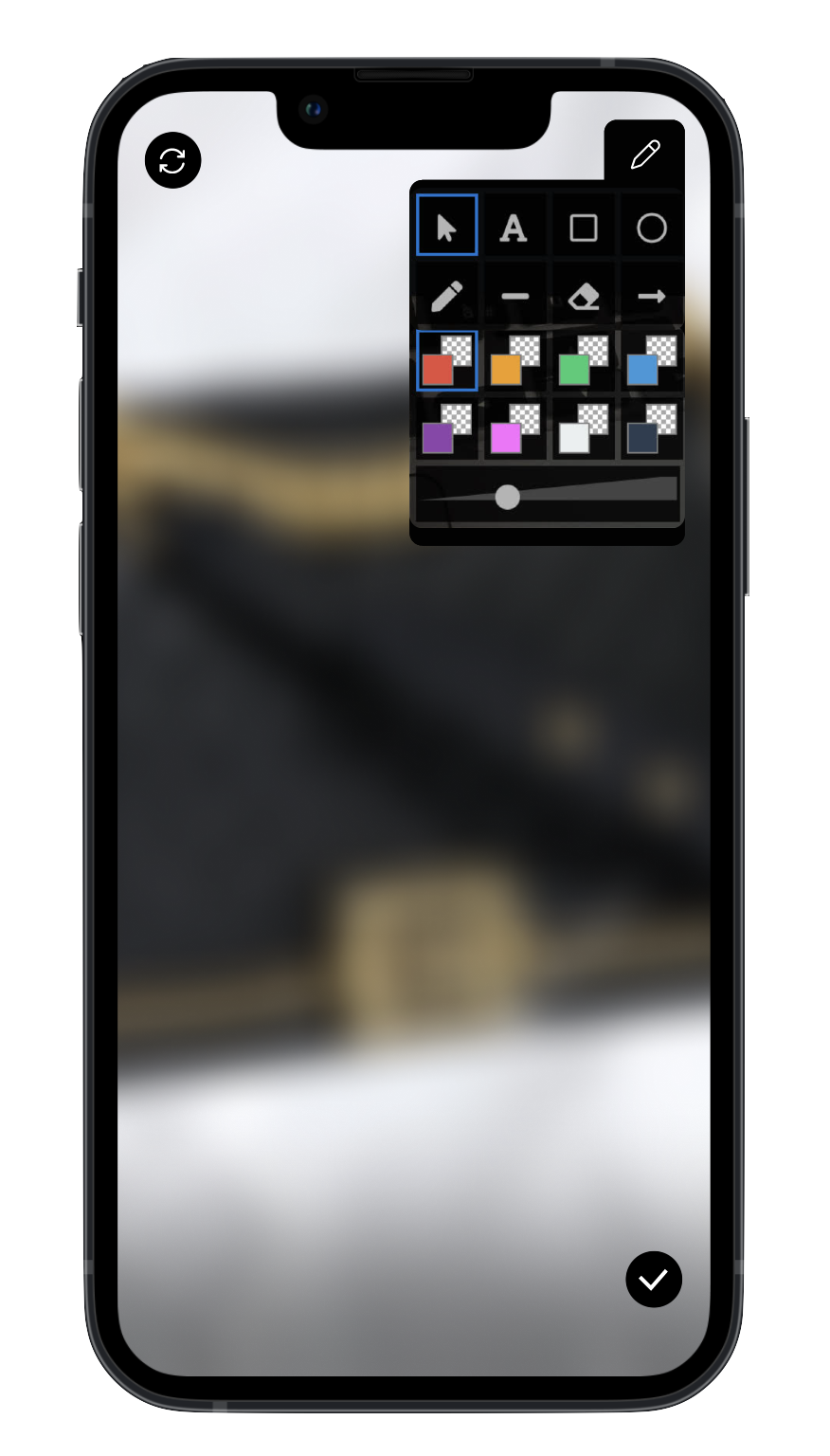
Introduce a product qualification step with photo documentation to record pre-existing damage and prevent disputes
💡 Solution
Embedded a mandatory photo step in the process for clear, objective documentation.
Ensure Controlled Case Closure🎯 Goal
Streamline case closure and discount management.
💡 Solution
Introduced structured discount rules and built-in tracking.
Process & Design Approach
🔍 Discovery & Framing Worked closely with Business Analysts to define division and market-specific needs.
Created user flows & high-fidelity mockups to align stakeholders on a target vision.
🧪 User testingLimited access to users, so we conducted limited usability tests, supplemented by data analysis of the legacy tool.
🚀 Delivery & IterationBroke down the target vision into a V0 pilot followed by incremental releases (V1, V1.1, etc.) to accommodate technical constraints. Prioritized features based on technical feasibility, user benefit, and business value.
Challenges Along the Way & How We Solved Them
Resistance to UXFrequent organizational changes led to resistance to UX
💡 Solution
I had to advocate for design, educated new teams, and strengthened collaboration with developers.
Limited User AccessLittle to no user research & testing possibilities
💡 Solution
Leveraged my personal past industry experience and analyzed old tool data to reduce bias.
Outcome & Impact
🌍 Roll outSuccessfully rolled out in Paris and expanding to the US & Japan.
💡 Adoption & Usability
Boutique advisors found the tool intuitive and efficient, enhancing customer interactions and reducing training needs. (During training sessions « We don’t really need any training on the app, it is really intuitive ».)
🏆 Recognized UX ValueThe brand renewed the UX contract with PwC, recognizing its critical role in the project’s success.